Advisories · Groups
Why the desk asks about bags before it asks about people
A vehicle is sized by luggage far more often than by seats, and getting this wrong is the worst kind of failure: one you find at the kerb.
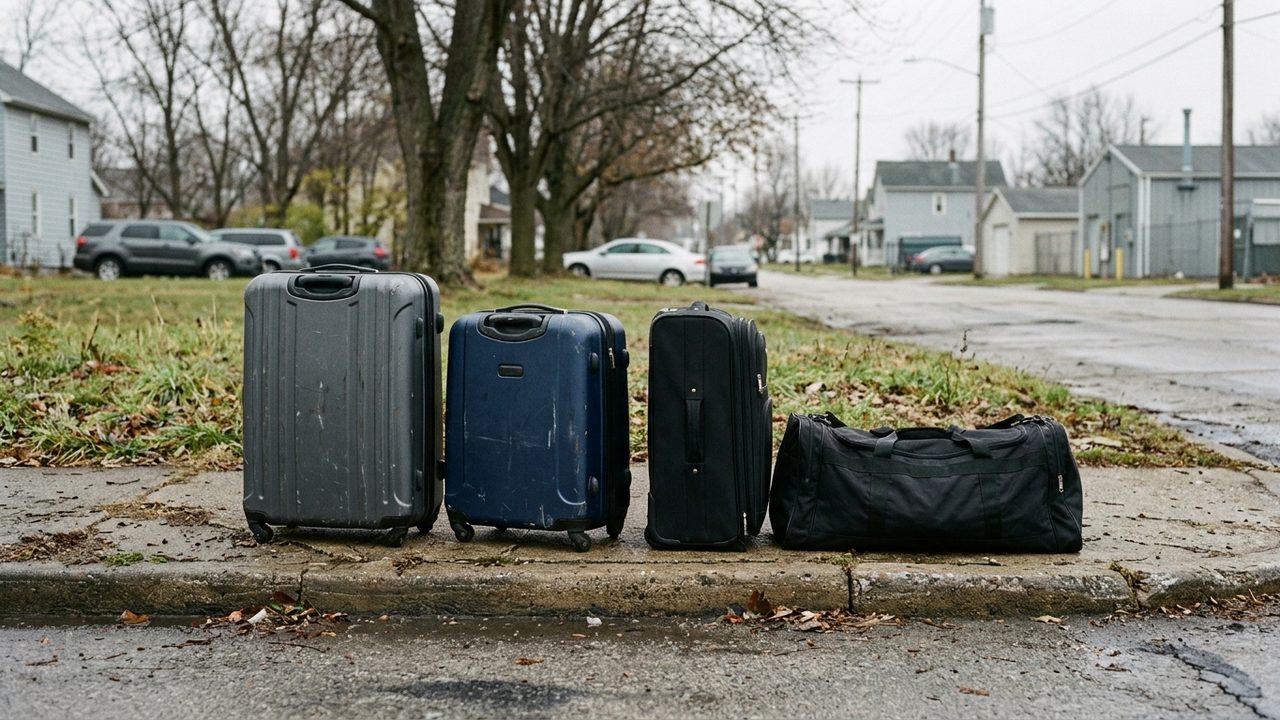
Every booking form on the internet asks how many passengers. Very few ask how many bags, and that is the question that actually decides which vehicle turns up.
The arithmetic nobody does
A sedan seats three passengers comfortably. It carries two large cases and a small one, or three mediums, in a real trunk with a real spare wheel in it.
Three passengers with three large cases each is nine pieces. That is not a sedan. It is not an SUV either.
The mismatch happens because seat counts are printed on every listing and luggage capacity is not. So people book by the number they can see, and the failure appears at the kerb, where nothing can be done about it except send a second vehicle and lose an hour.
Rough capacities
Real world figures, with a driver's own things already in the vehicle.
- Sedan: 3 passengers, 2 large cases plus 1 cabin bag.
- Executive sedan: 3 passengers, similar space, more comfortable cabin.
- SUV: 5 passengers, 4 or 5 large cases. Four passengers with four cases is the comfortable case.
- Passenger van: 7 passengers, 7 to 9 pieces depending on shape.
Note what happens with a full van: seven passengers with one large case each is already at the top of the range. Seven passengers with a case and a carry on each does not fit, and needs two vehicles.
The items that break the maths
Ski and snowboard bags. Long, rigid and awkward. One usually forces a class upgrade, two certainly do. From December to March the desk asks about these specifically.
Golf bags. A foursome with clubs is a van, not an SUV, whatever the seat count suggests.
Pushchairs. A compact fold takes the space of a cabin bag. A full travel system takes the space of a large case and does not compress.
Instruments. A cello needs its own seat, and the desk needs to know a week ahead rather than on the morning.
Bicycles in boxes. Almost always a van, and sometimes not possible at all. Ask early.
Why we would rather be told than guess
Two reasons, and both are about you rather than about us.
A vehicle that cannot take the luggage means waiting at the kerb for a second one, on the day, with a flight to catch. There is no good version of that morning.
And guessing upward is not the answer either. Booking a van for everyone would mean charging van rates to a couple with two cases, which is the kind of quiet upselling this desk is trying not to do.
What to say when you book
The number of passengers, and then, separately, the number of large cases, the number of cabin bags, and anything with an unusual shape. Twenty extra seconds on the booking form.
If you genuinely do not know yet, say so. The desk will quote the class that fits your best guess and note that it may move, which is far better than a confident wrong number.
Groups above seven
Above seven passengers you are into two vehicles, or a minibus from an operator who runs one. Both are arrangeable with notice, and both are quoted individually because the pricing works differently.
For groups arriving on the same flight, one thing worth knowing: two vehicles travelling together do not stay together in traffic, and they will not arrive at the same minute. If everybody must arrive together, that constraint has to be part of the booking rather than an assumption.